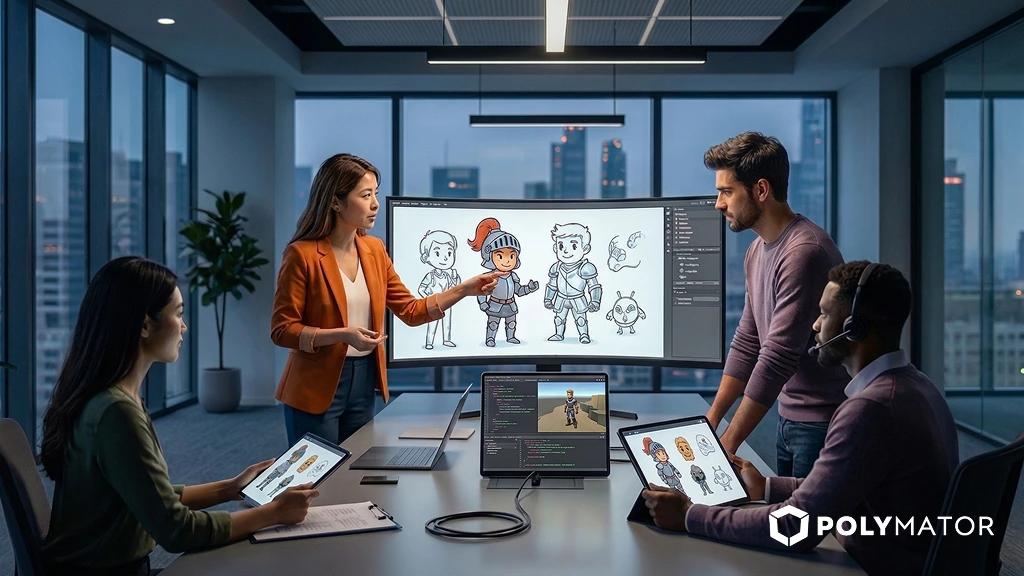
Ready to Level Up Your Game? How Can Game Development Outsourcing Help You?

Game development outsourcing is the means to facilitate deliberate tasks in game development for small to medium-sized game development studios. Game development outsourcing enhances the talent, expertise, and resources at affordable prices for game development studios, artists, and game developers.

Moreover, when you hire a game outsourcing company, it comes with its own set of difficulties. These challenges include adjusting the multiple time zones, maintaining a high calibre of the finished output, and managing the distant staff.

Nowadays, outsourcing game development is vital for tasks such as 2D or  3D animations, character design, programming, audio creation, and more. If you decide to develop any project internally, you might not have access to more competent workers or new technology.

However, it will be beneficial for you if you decide to outsource a game development company. You can, therefore, take advantage of additional chances while also obtaining the optimum price-performance ratio. Let us go through how game development outsourcing companies aid in leading your future programs.

Why Do You Need Game Development Outsourcing?

Before you look for game outsourcing companies, we need to be crystal clear about our goals and the objectives the game has set out to accomplish. Introducing game development outsourcing companies assists in outlining the features, functionality, overall design elements, and precise technical specifications of the game. 

Finding the ideal game outsourcing company aids in monitoring project progress. Game outsourcing made tasks easier with a well-defined product scope. 

Understanding The Game Outsourcing

Game Design & Concept

It’s essential to think about the potential outcomes of game outsourcing at every stage of game development. It is feasible to outsource even the beginning stage of the design and the conception. This ensures a new viewpoint and a wide range of creative ideas.    

Game Coding 

The base or the core of the game is its coding. When you talk about having some access to specialized knowledge, new technologies, and a set of skills without any substantial training, here comes game coding outsourcing as a game-changer.

Game Animation

When the game visuals are nice and attractive, it helps in determining how successful it is. Thus, if you hire a game outsourcing company, it provides a fine service to improve the art and animation of the game. Experts enhance the overall visual appeal and thrilling gameplay of your game. 

Game Quality Check

To make a game bug-free, it requires a lot of testing procedures along with quality assurance. The risk of post-launch problems is decreased by delegating testing responsibilities to specialised quality-controlling staff, who ensure strict testing procedures.

What Are The Advantages Of Game Development Outsourcing?

1. Cost-effective

  • Less overhead expenses: Working along with in-house development teams needs high expenses, which range from infrastructure pay to perks. By paying to a precise outsourcing game development company, your overhead expenses are reduced as well, and you get fine services.
  • Approach accessible talent: When you look for local in-house developers it is time-consuming and a bit expensive. Thanks to global outsourcing, which helps in accessing talent from areas with affordable labour costs. Higher quality work is completed as compared to employing locally.

2. Saves Time

  • Development simultaneously: Outsourcing offers a time-adjusting system that helps with game development even when your in-house staff is on holiday. Thus efficiently managing time along with the development.
  • Quicker turnaround: Outsourcing companies have tools that completely focus on a particular task, which fastens the work completion. A specialised outsourcing team speeds up their time to thrive in the market.

3. Managed By Specialised Experts

  • Distinct skill sets: With the help of outsourcing game development, you can put a team together with experts who have the ability to match the particular needs of your project. As soon as the design is completed by the experts, we’ve to manage for a while.
  • Modern Technologies: Game outsourcing developing teams keep apprised of the most recent changes in the tools and technology so that your game quality is assured. Your game will benefit from this breakthrough as well.

4. Risk Reduction

  • Task distribution: Sharing the task responsibilities between the team members lowers the risk of relying too much on an internal development team.
  • Managing projects fluently: A significant number of outsourcing partners have a lot of project management experience, thereby decreasing the chance that unexpected obstacles may cause your development schedule to be lacking in the race.

Things To Consider In Game Development Outsourcing

1. Look For The Appropriate Partner

  • Profile evaluation: It is important to ensure that the outsourcing partner matches your goals and objectives. Carefully look at their past portfolios and projects.
  • Expertise in technology: Evaluate the outsourcing team’s ability and technical skills to know how they possess the ability required for particular game development needs. You may also look after the tools and technologies they utilise for game development.

2.  Easy Communication Channels

  • Collaboration equipment: Make sure the lines of communication are clear and easily understandable. Make use of collaborative tools to make your communication effective throughout the development process. You can make a schedule for frequent update sessions and provide an efficient project brief.

3. Managing Time Zone Differences 

  • Cultural sensibility: Be conscious and sensitive to the cultural peculiarity of your outsourcing partner to promote collaboration and courteous working relations.
  • Time coordination: You can use techniques like overlapping work hours for real-time communication or adopting the asynchronous method of communication.

Get Ready To Level Up Your Game Development Outsourcing

In this fiercely competitive world of video game outsourcing, if one wants to succeed, one must engage with an outsourcing video game company like Polymator. Both small- and -medium-sized game development studios gain the benefits of cost and time-saving, feasible communication, and professionals for collaboration are too strong to resist.

Carefully evaluate the requirements of your project. Once you are clear about it, you may put yourself in a successful position in a field that is changing again and again. Choosing the best mobile game development services helps you communicate through difficulties and acquire fruitful results. So, are you ready to level up your game? Outsourcing your game development could be the smart move you will need to make in order to achieve your goals.

Which are the different Types of Video Games Monetization Models?

After rolling out Games on the app & play Store, Game Development Companies aim to generate significant revenues. And they bank on Game ‍Monetization to earn massive profits by providing users with in-app purchases to engage them more with the game & help them gain substantial advantages & edge over other players by staying ahead in the gameplay by having a higher number of objects, assets & characters.

Game Monetization is considered a primary revenue source for Game Development Companies, and users are paying money to buy games monetized properties only if they find it worth spending on them.

Hence, it is crucial to select the best monetization model to allure users to make game purchases. In this blog, we will walk you through the different Types of Video Games Monetization Models to guide you in choosing the ideal one for your game.

‍Types of Game Monetization Models

There are several Game Monetization Models. However, the effective ones are the following:

Microtransactions

It is a widely used Game Monetization Model with small in-game purchases to unlock compact features & content that can be purchased multiple times. It cash in massive revenues as they allure players to spend more. You can use them in free-to-play mobile & pc games and premium titles paid beforehand.

Microtransactions are primarily cosmetic that play a pivotal role in gameplay through skins or emotes. In non-cosmetic, there are specialized objects & boosts to enhance game characters & environments. Microtransactions give an edge to players purchasing them to stay ahead in gameplay over others.

It persuades other players to buy in-game features to achieve particular levels & shorten stages completion time. Such games are called “Pay to Win” as they influence non-paying players to make in-game purchases to achieve desired results.

In-Game coins & assets purchase in Candy Crush, Angry Birds, Lunch Frenzy, and Farm Frenzy are notable examples of the Microtransactions Game Monetization Model.

Loot Boxes Controversy

They are a form of Microtransactions that have become controversial, as the players aren’t aware of the requirement & outcomes of Microtransactions purchases. And players end up getting a random virtual item, leading to the game being called Slot Machines.

Persuading users to purchase in-game features & content with real money by creating a scarcity of the most essential & desirable game items is one of the most highly used ways to monetize loot boxes.

They intend to drive gamers to spend more & more by alluring them to stay engaged with gameplay. Though it is an effective Game Monetization Model, the Governments of various countries consider it a Gambling form by inducing users to unlock all the content & features for non-stop playing.

Hence, it is recommended that Game Developers & Game Development Companies stay updated with different countries’ regulations for using Loot Boxes Game Monetization Method in the games.

Premium Monetization Model

It is the most traditional way of selling in-game purchases for earning revenues. It is an upfront sale, alluring gamers to buy the entire game to play it. This concept has always prevailed at physical stores. And now it has moved to digital, allowing players to purchase their favorite full-version games on App & Play Store.

The upfront sales help Game Development Companies earn enormous revenue by creating a barrier to entry to gameplay. Through this Game Monetization Model, the transaction between a player & the publisher is over after the game is sold.

You can opt for DLCs (Additional Downloadable Content), which users can buy after acquiring the base game. DLCs have received positive reception as they capitalize on players’ willingness to get more of their preferred content. Developers can make the best of it by releasing limited DLC at regular periods to keep users engaged with their game.

Battle & Season Pass Monetization Model

A Battle or Season Pass is another extensively used Game Monetization Model, giving additional rewards to paying users for achieving specific goals in the game. Non-Playing players can get those rewards too, but it is challenging for them, which can be made straightforwardly by purchasing a Battle or Season Pass.

Unlike a subscription model, players can play the game without opting for the Pass. Users highly prefer it over Loot Boxes as they know beforehand what rewards they will be getting through the Pass and its importance, making it an ideal option free from unwanted linking with gambling.

Subscription Model

Users are required to purchase it to access & play specific game stages. The unlocked content is available weekly, monthly, quarterly, and annually in the Subscription Model. Players can purchase subscriptions according to their preferences, depending on how long they want access to unlocked game content.

It is one of the perfect Game Monetization Methods for developers looking to earn a stable income stream every month rather than earning upfront. The Subscription model keeps the users hooked on the game and allures them to come back to play more by purchasing a Subscription.

Early Access Model

In this Game Monetization Model, players can buy the full Game version by paying upfront, just as Premium Model. The difference is that users can purchase while the game is developing.

It is a fantastic model for developers to earn upfront income during development, along with feedback to enhance gameplay and make amendments based on players’ suggestions & demands. Game Development Companies opting for this method should initially keep lower pricing as the game is in development and gradually increase it once it is completely ready.

In-Game Ads Monetization Model

It is one of the most prominent Game Monetization Model, where users must watch in-game ads in free-to-play mobile games. The In-Game Ads can be loading screen ads, ad pop-ups, product placement, or banner ads to monetize the game & keep the players hooked, as they don’t have to purchase game content or feature. They can simply unlock it by watching a paid ad.

This model increases the chances of in-game content sales and generates additional revenue apart from selling game features by displaying paid ads often. If you want an effective & lucrative Game Monetization Method, In-Game Ads are perfect as they allure more users to play the game as there is no need to purchase Microtransactions or Subscriptions. They can watch paid ads to earn rewards to unlock different game content of their preference.

Crowdfunding Model

It is a gradually adopting Monetization Model, which involves sharing game ideas to connect with potential players to captivate their attention & persuading them to pay upfront for game development funding.

Once the game is released, players can access it and earn additional rewards, depending on the payment they made beforehand. The rewards vary from character features to objects, weapons, or access to environmental buildings in the gameplay.

Game Development Companies must put enormous efforts into raising targeted Crowdfunding to make this Game Monetization Model effective. Also, developers need to be cautious, as a game launch can become controversial if the game has several obstacles & restrictions on gameplay for the users even after paying upfront.

Fantasy Strike, Mission in Snowdriftland, Sun Haven, Roots of Pacha, and Phoenix Point are some notable examples of Crowdfunding video games.

Play-to-Earn Monetization Model

It is a trending Game Monetization Model employing Blockchain Technology & NFTs for building game assets that players can sell for “real” money. And the game developers earn profits by selling each transaction through a set percentage. Game assets have stats that users can enhance by playing games.

The players can ascertain to make them accessible to others via selling assets for higher prices to gain monetary benefit. Bitcoin & Cryptocurrencies are prominent examples of this model, where users sell the asset at a high cost to earn massive profits.

Game Developers using this Play-to-Earn Game Monetization Model need to keep their apps’ blockchain network encrypted and secured from potential cyber-attacks and trojans.

Hybrid Monetization Model

This Model has been widely adopted by several successful modern days. It combines two or more methods described in the blog to enjoy the benefits of each Model for earning revenues from different sources.

The hybrid model helps cater to players’ spending habits by offering more to those willing to pay and less to those who wish to stick to In-Game ads or lower-priced subscription models.

Multitudinous mobile games use a combination of two or more models, such as In-Game Ads, Microtransactions, Subscriptions, and Battle or Season Passes, to keep users with different preferences engaged with the gameplay.

You can provide access to new content through different available Game Monetization Methods to ensure a regular income stream & build a new user base.

‍How to Select a Game Monetization Model?

Selection of the most effective Game Monetization Model for every game depends on players’ expectations, feedback, suggestions, and timely update to keep them hooked on the game. E.g., if your Game Monetization Method is Premium Model, in which a player has paid upfront to access the full version, then you must keep in-app purchases pricing minimal to ensure users don’t feel scammed.

Also, avoid In-Game Ads in the premium version, as users pay significant premium model fees to play Ads-free games and access their favorite game features & content without additional cost.

We recommend keeping an Aggressive approach of subscription, paid ads, microtransactions, and battle/seasonal passes in Free-to-Play games where players haven’t spent on gameplay. Also, try to make your game free from excessive monetization, where users are required to make purchases at every stage, and non-playing users can’t play the game at all.

The purpose of your Monetization Model should arise at specific stages of gameplay where the users will be willing to pay for it to proceed to the next scene. Keep the In-Game purchases at regular breaks to enthrall the users and not frustrate them.

We recommend using a mix of all models and meticulously planning them at different game levels to keep players engaged with your game and make your game portrayed as authentic & genuine rather than spam.

Conclusion

After reading the blog, you will have a firm comprehension of different Types of Video Games Monetization Models: Microtransactions, Loot Boxes Controversy, Premium Monetization Model, Battle & Season Pass Monetization Model, Subscription Model, Early Access Model, In-Game Ads Monetization Model, Crowdfunding Model, Play-to-Earn Monetization Model, and Hybrid Monetization Model.

However, if you have questions regarding any method or need assistance selecting your game monetization model, feel free to contact us.

At Polymator, we are specialized in creating various game genres of different budgets according to our client’s requirements & needs. We help our clients design a mixture of multiple models so they can earn maximum revenue from each model to increase their game ROI.

Our highly experienced & professional Game Development Team is proficient in 3D Game Art Services, including 3D Art For Games, 3D Environments Modeling, 3D Characters Modeling, and 3D Animation.

Partner with us to build your dream game with lucrative Game Monetization Models. Contact us for a consultation and quotation for your game. And alternatively, please email us your game requirements at contact@polymator.com.


Unity vs. Unreal: What to Choose for Your Game?

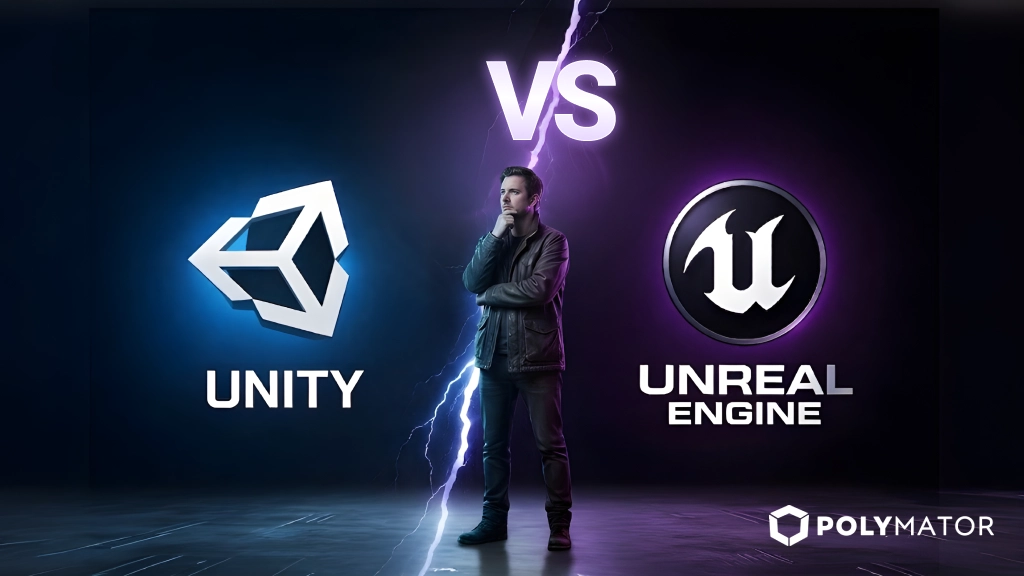
Game Engines are the foundation of creating video games, and when it comes to the selection of Game Engines, two top giants always make it difficult for game developers and clients – Unity and Unreal. They both include massive tools, plugins, libraries, and customization features to design fantastic entertaining games.

Both gaming engines are prominent for creating games that keep players hooked and keep them coming back to play more. Each game engine has its specific set of features to perform a particular set of tasks.

With the game development industry booming and cutting-edge software evolving consistently to create immersive gaming worlds, game development companies and developers need clarification about which gaming engine to pick from Unity or Unreal.

In this blog, we will walk you through the ultimate difference between both to clarify which one to choose.

What is Unity Engine?

It was launched by Unity Technologies in 2005 and initially designed for OS X Games. Nowadays, you can develop cross-platform games, 2D & 3D games with the Unity game engine. With its vast asset store, versatile tools, handy tutorials, online courses, and easy-to-learn language code, it is a top pick for developers worldwide. Unity has a huge community of developers of different expertise levels.

What is Unreal Engine?

It was created by Epic Games in 1988 and is renowned for its high-end graphics & photorealistic, which makes it possible to bring any game vision to life. It helps game developers implement any game idea into a playable advanced video game for various genres. Several successful games worldwide have been developed using Unreal.

Difference between Unity and Unreal in terms of critical factors

Versatility

As a game developer, you always want to choose a game engine that offers outstanding versatility, allowing you to work on multiple game types. Hence, many game developers look towards Unity and Unreal, as they provide flexibility for a wide range of games.

The following is the range of games that you can develop with Unreal and Unity, which will clarify which to choose according to your project suitability:

AR & VR Games

Both gaming engines can create enthralling immersive worlds and keep the players on the edge of their seats with their captivating gaming experience. However, Unity outperforms Unreal when it comes to AR & VR Projects.

Mobile Games

Hands Down! Unity is one of the top preferences for many game developers for mobile game development compared to Unreal because of its broad categories of tools, libraries, and features for creating fascinating mobile games.

2D & 3D Games

Both game engines offer significant capabilities to build premiere quality immersive graphics. However, Unreal is an ideal & optimal choice for 3D visuals, and Unity has a vast toolset for 2D Animation Production.

Multiplayer Games

You can create magnificent Multiplayer games with both game engines. However, Unreal has rich integrated support than Unity. You can use third-party frameworks along with Unity to develop Multiplayer games.

Coding

Both Unity & Unreal have a visual code editor. Unity has Prefab & Unity has Blueprint. In Unity, codes are written using C# language and C++ in Unreal. Unity uses C#, and Unreal uses C++. C# provides faster iteration & compile times.

In Unreal, you don’t require in-depth technical knowledge of codes or basic comprehension of writing them. Developers can develop games through tools in Blueprint, which are valid code pieces. You can make nodes & connect them in just a few steps to build game logic.

In Unity, beginners have the upper hand as it is straightforward to learn & utilize. It has a user-friendly interface & simple architecture. Programs in Unity inform users about incorrect code and issues.

Rendering

Rendering helps optimize post-processing game development. Hence, it is critical to select a top gaming engine. When it comes to quality & rendering speed, Unreal is better than Unity due to the industry-leading rendering speeds & supreme quality rendered graphics.

Graphics Quality

Unreal is undoubtedly the leader in terms of stellar graphics production. It has ready-to-use tools, which are customizable. Game artists can access volumetric lights, lenses, flares, proper lighting, and shadows with an aesthetically pleasing smooth falloff.

In Unity, you can achieve AAA-quality results, but it is time-consuming. It supports normal & occlusion maps, standing shading features, and base textures. However, it lacks shading details & advanced material editor, which is in Unreal.

Asset Store

Both gaming engines offer rich Asset stores allowing users to download free & paid shading, textures, props, and more. However, the Unity asset store offers countless assets, making it a grandiose asset bank for users. Unreal is more oriented towards completed game productions used previously in AAA games and offers superior visual quality.

Conclusion

After reading the blog, you will have clarity between both gaming engines in terms of critical factors. To summarize, Unity has a rich Asset store and faster iteration & compile time. Beginners can quickly learn & utilize Unity for game development. However, in terms of rendering & graphics quality, Unreal has a significant upper hand over Unity.

At Polymator, we offer Unity Game Development Services. We have a highly experienced & skilled game developers team ready to take up any project of different scales & complexity. Contact us for your mobile video game consultation and quotation. And alternatively, please email us your game requirements at contact@polymator.com.

Create a successful Mobile Game in just 7 steps

Mobile Apps have skyrocketed in the last 8 odd years, and post-pandemic, people have started spending more time on their smartphones using different mobile applications and playing games. It has inspired and motivated gaming app developers to make mobile games to keep up with the mobile game market trends and demands.

There are numerous ways to make a mobile game app. However, following an incorrect pattern and process can lead to a shoot-up in game development costs and time. In this blog, we will walk you through 7 steps of successfully creating a mobile game app.

Steps of Creating a Successful Mobile Game App

Initial Planning

The foundation of any building, product, service, or app is its foundation, which involves solid initial planning by properly comprehending the concept, vision, and ideas for turning them into reality. Proper planning is necessary for game conceptualization, which can make or break your game.

The first step involves appropriate planning about what you “actually” want to develop. E.g., do you want to make a puzzle game, racing car/bike game, treasure hunt game, mafia game, or kid’s game?

To simplify this, you can jot down ideas to come up with unique ideas for gameplay, characters, environments, objects, animation, different art styles, and more that will make your game enthralling and electrifying to engage a mass audience.

Once you have decided on the game genre, sketch your game characters, environment, animation, objects, and vital elements. And describe in writing how you want your end game to look like. Ensure it is crisp, precise, and concise for better comprehension.

We recommend maintaining a journal or notepad to keep the mobile game ideas, vision, and concepts organized in one place for quick reference.

If you are still confused and need clarification regarding picking a game genre, we recommend referring to the blog from YouGov, on the list of the most popular categories of mobile games, with statistical data for better understanding.

Choosing the right mobile game development software

Once you have decided on the game genre and done initial planning, the next step is selecting the right mobile game development software. It is the make-or-break stage, as the correct mobile game development software will help you make astounding & stunning visuals.

It is the step that will decide the coding tools for your mobile game app to showcase your creativity and convert the concepts into reality. There are numerous mobile game development software available in the market.

Refer to our other blog on the best mobile game engines and development platforms in 2023 for your assistance. However, if you need clarification & guidance, feel free to contact us.

Programming Language

After selecting mobile game development software, the next step is to hire a mobile game app developer proficient with mobile game app programming language. You must also learn and be proactive with a programming language to be on the same page with mobile game developers.

At Polymator, we have highly qualified and skilled mobile game app developers who are well-versed in programming language and a wide variety of game libraries to take your game to the next level. Our Unity Game App developers will add an exquisite touch to your mobile game app.

Begin mobile game app development

The next step is starting your mobile game app development project. We recommend the following tips for keeping the process straightforward:

  • Begin with basic mechanics and rules of gameplay.
  • Design your game’s first level by implementing graphics and running tests
  • Finally, creating the mobile game interface in the form of screens, menus, options, settings, and more required elements.

The above three steps will simplify your game creation process and mitigate any complications.

Implementation of mobile game graphics

This step involves deciding on the game graphics, whether you want 2D or 3D graphics in your mobile game. After deciding on 2D & 3D, you must determine if you wish to do it in-house or outsource to a mobile game app development company.

We recommend using Photoshop for 2D Graphics, and for 3D graphics, we recommend Autodesk Maya and Autodesk 3Ds Max.

At Polymator, we use the best tools for creating 2D & 3D graphics, and our designers are well-versed with the tools and create immersive graphics. Hire mobile game app graphics designers from us and take your game graphics to the next level.

Boost your app gameplay

Once you have laid out your mobile game app, you must refine it to create an enthralling & spectacular end-user experience. The following are some common tweaks to boost your app gameplay:

  • Keep the controls easy to operate & intuitive.
  • Keep an interactive & engaging storyline to make users instantly connect with the gameplay & plot.
  • Creation of the required mood by adding suitable & appropriate music to make the gameplay enthralling & electrifying.
  • Ensure the visual elements of your game don’t pixelate
  • And most importantly, constantly runs tests to detect and fix bugs or errors.

Releasing game in the market

The final step involves releasing your mobile game in the market. The common mistake that mobile game app developers commit is spending more time & investing efforts to make the game more perfect, which can hamper the game.

Ensure to pay attention to testing & refinement for rapidly releasing the game in the market. Once the game is released, take feedback into consideration and work on it quickly to enhance the overall end-user experience with your game. Ensure to regularly release updates to keep your audience engaged with your game.

At Polymator, our game app developers will help you run final tests to ensure your game is ready for release. And we also consult top game app review companies to foster your game end-user experience.

Conclusion

After reading the blog, you will have firm clarity regarding how to successfully create a mobile game app in just 7 steps. By following the 7 steps mentioned in the blog, you can effortlessly develop your mobile game app by ensuring it has all the elements from proper planning to software selection to enthralling gameplay.

However, if you need more tips or have questions regarding mobile game app development or software, feel free to contact us.

At Polymator, we provide comprehensive mobile game app development services for both Android & iOS platforms. We have one of the most skilled and dexterous mobile game app developers who have immense expertise & knowledge in mobile game development and creation.

Outsource your mobile game development to us, and we will effortlessly develop your mobile game. You can utilize the saved time, resources, and cost in your core business activities. Contact us for a consultation and quotation for your mobile game app. And alternatively, you can email us your game requirements at contact@polymator.com.

A Comprehensive Guide on Outsourcing Mobile Game Development

Mobile Gaming Industry is one of the world’s most extensive entertainment & profitable industries, projected to cross the US$180bn mark by the end of 2023. These astonishing figures and users demanding various genres of games are encouraging game development start-ups to make their mobile gaming apps. 

However, there are massive costs involved in developing mobile game apps, which can be mitigated by outsourcing mobile game development to a mobile game app development company to simplify the process. 

In this blog, we will walk you through when it is better to outsource mobile game development and the factors to consider while choosing a mobile game development company.

When is the best time to Outsource Mobile Game App Development?

Many gaming app companies complete mobile game app development projects by hiring a full-time game app development team or by outsourcing tasks to a mobile game app development. 

However, there are many situations when outsourcing mobile game app development is profitable. The following are the situations when you should outsource mobile game development:

Planning complex projects

Every game project involves earning maximum profits, and to achieve this vision, gaming companies choose cross-platform development to reach a wider audience. 

However, this approach can be tricky, especially when handling and working on complex functionality projects and projects requiring robust graphic requirements. 

To simplify the challenging projects and achieve the vision, you must outsource the game development process to a mobile game development outsourcing company who have the required experience & knowledge to handle challenging projects and deliver your visioned results.

At Polymator, we have the most experienced game development team who have immense expertise in handling complex projects with ease and delivering spectacular results by exceeding your expectations.

Limited Budget

It becomes arduous for gaming app companies to complete the project within the allotted budget, especially when the budget is limited or crosses the budget line.

Gaming app developers might not be able their express their creativity to the fullest as they will have limited freedom to showcase their creativity & skills due to a limited budget. Hence, it is advisable to outsource the project or specific tasks to a game outsourcing company that will handle and complete the allotted tasks within the allocated budget.

At Polymator, we comprehend our client’s vision, game requirements, and budget. And accordingly, we formulate a plan to complete their allotted tasks within their budget & meeting their expectations.

Insufficient Time

Gaming app companies work with a vision to release the game within their visioned timeframe in the market. However, due to many complex factors and unexpected challenges, they are not able to release the gaming app on time in the market. Hence, it is advisable to outsource the mobile game development.

Outsourcing companies are flexible and have immense expertise in working within the dedicated time frame and delivering you the finished app well before time. It will help you release your gaming app before the deadline in the market to start getting ROI.

Absence of specific software & tools

The professional mobile game development process requires high-level game engines, software, and tools for 3D Development, 3D Animation, 3D Visual Elements, 3D textures, and more. E.g., developing a mobile game in Unity or Unreal Engine makes the processes faster and delivers premier quality results. 

However, these gaming engines & software require significant investment and cost, making it sensible to outsource the process to a game development company with the necessary game engines and software for your game development.

At Polymator, we offer Unity Game Development Services, and we have the most competent Unity game development team who are well-versed in developing mobile games on Unity.

Not having an in-house team

Many companies are passionate about making games. However, they lack a talented and proficient gaming app development team in-house for developing games. 

Hence it is financially viable to outsource the game development tasks and processes to a game development outsourcing company with a specialized team and they have the required expertise & knowledge for making the mobile games. 

They are regularly trained & updated on advanced tools & software to deliver magnificent results to the clients. Outsourcing the game development process will help you save significant costs on hiring resources, training them regularly, and updating them with the latest updates.

At Polymator, we provide mobile game development outsourcing services to take off the burden from you for mobile game development. We will take care of your entire mobile game development process to deliver you a completed mobile game.

Factors to Consider for Choosing a Game Development Company

Specialization

Ensure the game development company you choose specializes in various mobile gaming projects to help you meet your required vision, ideas, and concept for your mobile game app. The game app development company should be specialized in multiple game development tasks.

Experience

You must pay attention to the overall experience of the game development team you hire for your mobile game development. Experience speaks volumes, and exhibits highly professional attitude & creativity to attain the set benchmark for every game development.

Skilled team

You must also ensure that the game development team you are hiring is skilled in various genres, gameplay, and topics. The game development team should be proficient in multiple game development phases.

They should have the required team of game developers, designers, modelers, animators, QA engineers, scriptwriters, texturing artists, and an audio team.

Testimonials

Another pivotal factor to consider is going through the client reviews, testimonials, and portfolio of the game development company and the team you are hiring. 

It will help you comprehend whether the team and company are capable of achieving your desired game vision by turning it into reality.

Communication

Last but not least. Maintaining fair transparency in Communication between internal teams and clients is vital to ensure the game is being developed according to the client’s concept and ideas. 

Coordination and Communication ensure that the company works as per the client’s vision and the time zone in which the client is based.

Conclusion

After reading the blog, you will have a comprehensive understanding of when is the best time to outsource mobile game development and the factors to consider for choosing a mobile game app development company. 

It is always advisable keeping the modern-day rapidly changing environments and fast-growing technology to outsource the mobile game development process to stay worry-free of constantly upgrading software & tools and training your workforce. 

However, if you need more tips or have questions regarding the mobile game development process, feel free to contact us.

At Polymator, we provide comprehensive mobile game app development services and Unity mobile game app development services

We have highly qualified & professional mobile game app developers, designers, modelers, animators, QA engineers, audio team, and scriptwriters with immense experience and knowledge to add a spectacular and exquisite touch to your mobile game. 

We will deliver you the mobile game app within the dedicated time frame to help you release the app rapidly in the market so you start getting ROI. 

Contact us for a consultation and quotation for your mobile game app. And alternatively, you can email us your game requirements at contact@polymator.com.