- Services
 Featured case studyA high-fidelity VR walkthrough of a 155mm howitzer that boosted training retention by 70% and cut trainee errors by 45%.Read Case Study

Scale your business with enterprise-grade metaverse solutions powered by real-time 3D, blockchain and spatial computing. With years of experience delivering high-performance immersive applications, Polymator builds secure, scalable metaverse ecosystems that accelerate innovation and create measurable business impact.
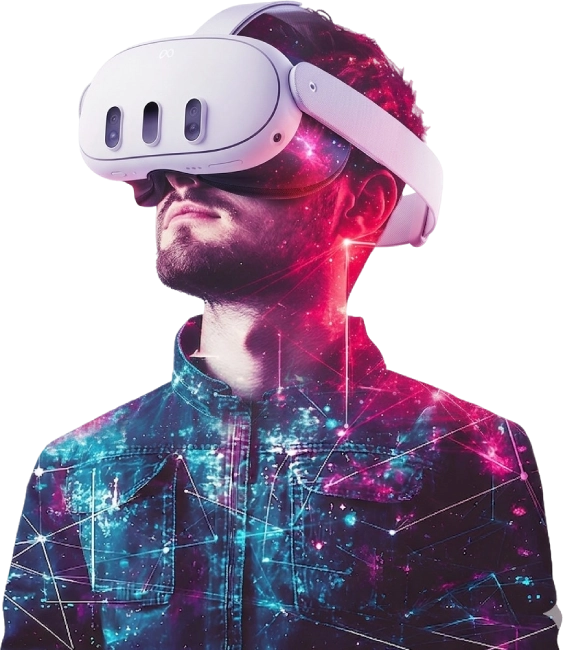

Polymator builds enterprise-grade metaverse solutions that elevate how users train, engage and experience digital spaces. Our solutions combine real-time 3D development, blockchain-backed asset control, spatial computing and cross-platform XR architectures to deliver stable, secure and high-performance virtual ecosystems.
We engineer metaverse experiences that support complex interactions, protect digital assets and integrate seamlessly with existing enterprise systems. Every experience is shaped around your operations, user expectations, compliance needs and long-term technology roadmap.
With deep technical capability and strong product strategy, Polymator helps enterprises unlock new revenue streams, strengthen digital presence and future-proof their innovation pipeline.

We deliver AR and VR development services powered by the Unity engine, building interactive 3D experiences with structured asset pipelines and interaction logic. Our work integrates with client systems to support training, innovation, or industry-specific use cases.
Let’s Talk
We create virtual marketplaces that support product discovery, user navigation and conversion within interactive 3D environments. We translate product journeys into immersive environments that support discovery, comparison and conversion within existing commerce ecosystems.
Let’s Talk
We build 3D immersive environment designs for training and simulation use cases across industries. Spatial layouts, asset structures and interaction zones in the environment are built by our team to support performance, multi-device compatibility and long-term maintenance.
Let’s Talk
We design gameplay systems, implement interaction mechanics, optimize assets and ensure consistent gameplay across devices like Meta Quest, Apple Vision Pro, Pico and more. We focus on playability and cross-device compatibility so games can be deployed, supported and monetized with confidence.
Let’s Talk
Our team helps connect immersive experiences with existing enterprise systems. We connect immersive applications with authentication, backend services and enterprise platforms to avoid standalone deployments and long-term technical debt.
Let’s Talk
Production-ready avatars built for Unity-based immersive environments, with clean topology, production-ready rigs and optimized assets. Our work focuses on making those avatars usable, controllable and compatible across platforms, devices and evolving environments.
Let’s Talk

High-quality 3D worlds create deeper engagement and keep users active longer.

Cloud and real-time engines support large audiences without performance drops.

NFTs, virtual goods and paid events open strong digital monetization opportunities.

Accessible across VR headsets, mobile apps, desktops and browsers without compatibility issues.

AI, AR/VR and Web3 integrations keep your metaverse relevant as technology evolves.
Being a fast-growing metaverse app development company, we follow a well-defined and future-ready development process that covers every aspect of metaverse solutions perfectly suited for enterprises across the globe.



Polymator builds metaverse environments using enterprise-grade engines, real-time 3D pipelines and multi-platform AR VR frameworks. Our tech stack is designed for scale, performance and seamless interoperability across devices.








From global enterprises to innovation-driven startups, leading brands trust us to deliver immersive, scalable and outcome-driven digital experiences. Together, we work to enhance engagement, strengthen brand presence and drive growth across industries.









Our clients love working with our team
A metaverse platform is a persistent, multi-user 3D environment where multiple participants can interact simultaneously in real time. A VR application is typically a single-user or limited-user experience. Metaverse platforms support social interaction, collaborative work, virtual commerce and real-time events at scale.
Polymator builds enterprise metaverse environments for virtual training campuses, multi-site collaborative workspaces, immersive product showrooms, museum and cultural heritage experiences, real estate project visualization and virtual conferences and events.
Not necessarily. Blockchain and NFTs are relevant only when digital asset ownership, token economies or decentralized commerce are core requirements. Most enterprise metaverse projects — training environments, collaborative spaces, virtual showrooms — do not require blockchain infrastructure.
A basic metaverse environment with core interaction and navigation typically takes 10-16 weeks. Full-featured platforms with multi-user systems, custom avatar integration, commerce and analytics take 20-32 weeks depending on scope and complexity.
ROI comes from reduced travel costs for multi-location collaboration, improved training outcomes over traditional methods, new revenue streams from virtual commerce or events, and increased audience reach for cultural or marketing experiences. ROI depends on use case alignment and adoption rate.

Collaborate with our experts to plan and execute a metaverse solution that supports your operations, strengthens engagement and scales with demand.