- Services
 Featured case studyA high-fidelity VR walkthrough of a 155mm howitzer that boosted training retention by 70% and cut trainee errors by 45%.Read Case Study

Bring your product into the spatial era with VisionOS experiences engineered for performance, scale and enterprise ROI. Polymator helps you turn spatial computing into a competitive advantage with secure, high-fidelity applications built for real users and outcomes.
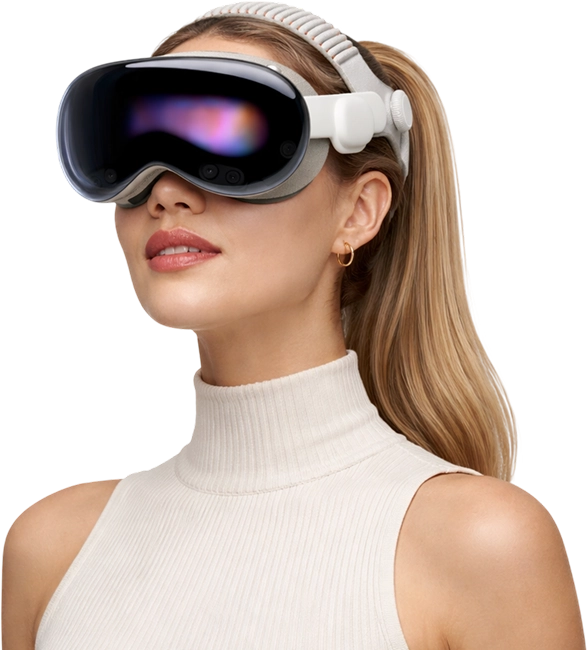
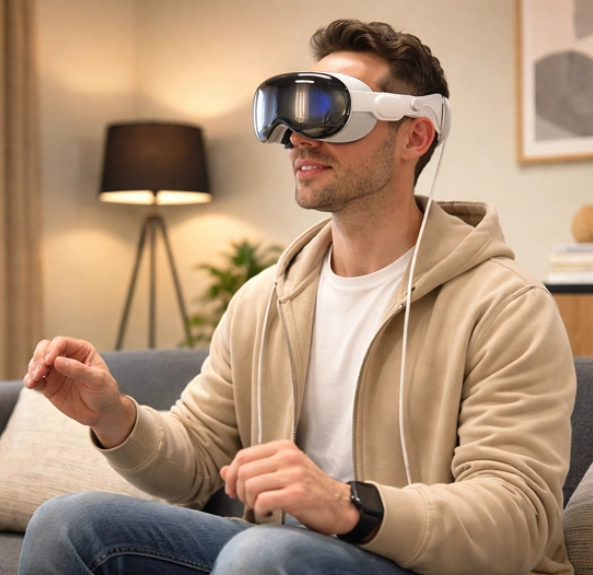
Deliver next-generation spatial experiences with precision-engineered VisionOS apps, built by Polymator to meet actual enterprise demands and unlock new digital possibilities. Our team delivers Apple Vision Pro solutions that help businesses unlock new digital capabilities and stay ahead of industry innovation.
With our deep XR expertise and hands-on experience with visionOS, we develop spatial apps that enhance workflows, improve customer engagement and elevate product experiences. From immersive interfaces to real-world anchored interactions, every build is optimized for reliability, scalability and deep enterprise impact.
Focused on quality engineering, seamless experience design and long-term support, Polymator ensures your VisionOS application is built for today’s demand and tomorrow’s growth.

We develop native spatial apps for Apple Vision Pro using visionOS frameworks, RealityKit and Swift-based workflows. Our team focuses on spatial UI, gesture input, performance constraints and long-term maintainability of the apps within Apple’s ecosystem.
Let’s Talk
We develop enterprise Vision Pro solutions enabling industry-specific use cases. Our expertise spans across use cases such as immersive training, spatial data visualization, remote collaboration and operational guidance across manufacturing, healthcare and enterprise environments.
Let’s Talk
3D visual content created specifically for Vision Pro spatial experiences. Our Metaverse team designs assets with a focus on depth, scale and spatial context while meeting the performance and visual fidelity requirements of visionOS environments.
Let’s Talk
We build custom Vision Pro applications with tailored workflows, spatial layouts, life-like 3D models and high-fidelity visuals. Our solutions address enterprise use cases across training, collaboration, simulation and immersive product experiences.
Let’s Talk
visionOS integration services that make Vision Pro apps behave correctly at runtime. We align system frameworks, spatial input and app lifecycle handling to prevent instability, unexpected behavior and platform-level failures.
Let’s Talk
We help businesses in making the right build decisions early. Our solution delivery consultants validate feasibility, platform fit and scope to eliminate costly rework, misaligned builds and failed Vision Pro deployments.
Let’s Talk

Deliver rich spatial interfaces that keep users fully engaged inside your app.

Eye, hand and gesture controls make your app intuitive and usable for everyone.

Blend digital content with the real world using interactive, spatial UI elements.

Built with familiar Apple tools like VisionOS SDK and Reality Composer Pro for smooth development.

Port Unity projects easily and extend them using Apple’s spatial computing ecosystem.

We follow an agile VisionOS development approach that keeps your requirements at the center and maintains full transparency throughout the project lifecycle. As Polymator progresses through each phase, we adapt quickly to evolving needs and ensure the timely delivery of high-quality spatial applications built for performance, usability and long-term scalability.



Developing secure, reliable and seamless spatial computing apps demands strong web, mobile and 3D development expertise. Polymator uses proven, industry-leading technologies to ensure every Apple Vision Pro application delivers high performance, stability and an exceptional user experience.








From global enterprises to innovation-driven startups, leading brands trust us to deliver immersive, scalable and outcome-driven digital experiences. Together, we work to enhance engagement, strengthen brand presence and drive growth across industries.









Trusted by 100+ happy customers.
AR games overlay digital elements onto the real world using device cameras, allowing players to interact with their physical environment. VR games immerse players completely inside a virtual environment using headsets, enabling deeper immersion and more controlled gameplay without real-world distractions.
VR games use engagement mechanics — challenge, reward, progression and competition — to make training content more engaging. This improves completion rates, knowledge retention and skill transfer compared to traditional compliance training or e-learning modules.
Polymator develops for Meta Quest 2, 3 and Pro, HTC Vive, Apple Vision Pro, Pico headsets, and mobile AR using ARKit (iOS) and ARCore (Android). Platform selection is guided by your audience’s devices and the type of gameplay experience required.
Polymator applies locomotion design principles — stable frame rates (minimum 72fps), smooth movement options, clear visual anchors and comfort settings — that reduce vestibular conflict. User testing with diverse participants validates comfort before release.
Small AR games start from $15,000-30,000. Mid-scale VR experiences range from $30,000-100,000. Large-scale immersive multiplayer games exceed $100,000 depending on world complexity, interaction systems and platform requirements.

Collaborate with our solution experts to bring your ideas to life. Every project is handled with complete confidentiality and protected by an NDA.