
- Services
 Featured case studyA high-fidelity VR walkthrough of a 155mm howitzer that boosted training retention by 70% and cut trainee errors by 45%.Read Case Study

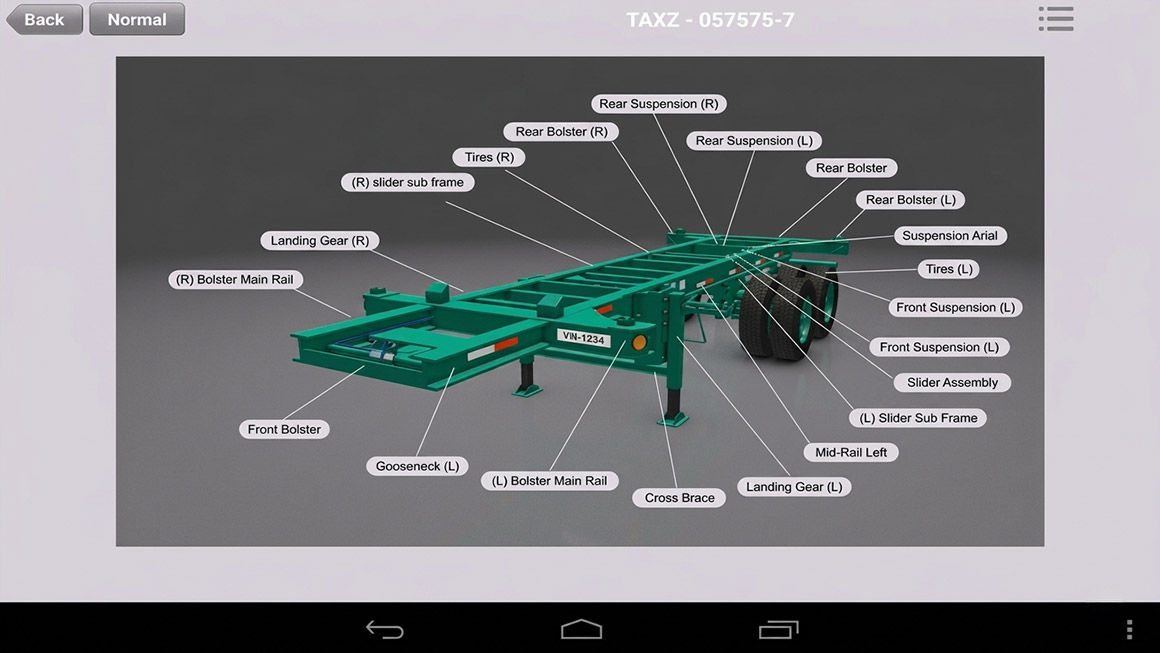
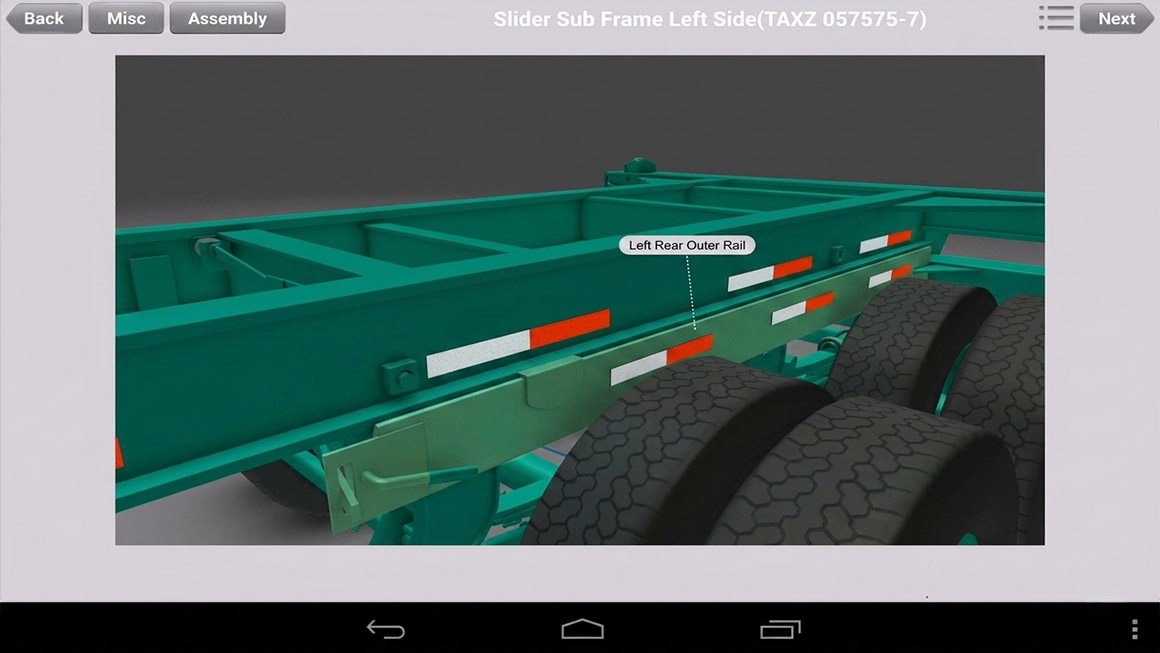
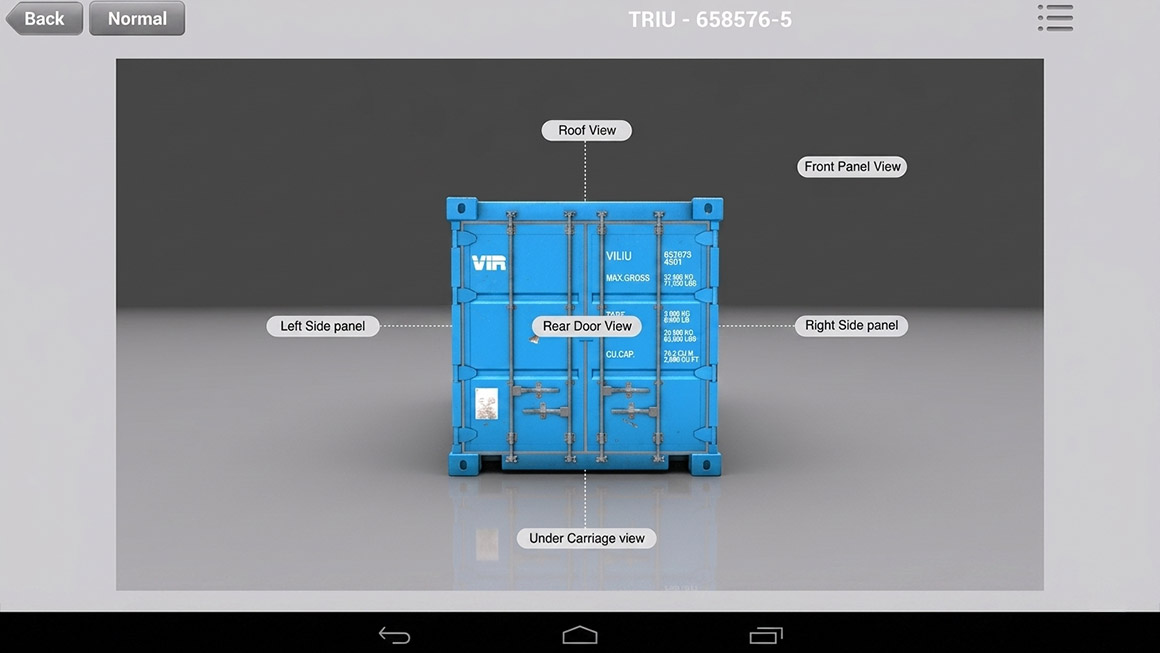
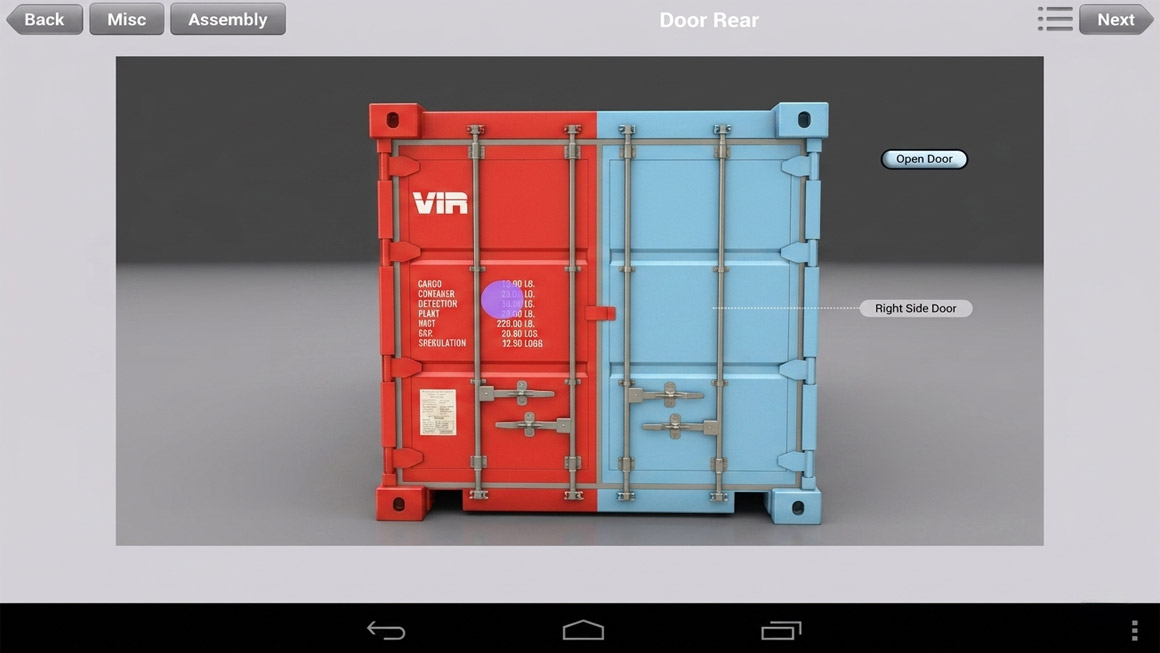
The Virtual Interchange Report (VIR) is an interactive estimation platform for the shipping industry that works on Android tablets. The solution was designed to replace traditional paper-based inspection processes used for chassis and container damage estimation, gatekeeping operations, and yard inventory management.
The platform operates across three user roles, like Gatekeeper, Estimator, and Mechanic, enabling in-gate and out-gate inspections, component-level damage marking, and repair estimations. By combining interactive 3D CAD models with inspection processes that use hotspots and cloud syncing, VIR makes yard operations quicker and more precise while greatly lowering mistakes and delays.
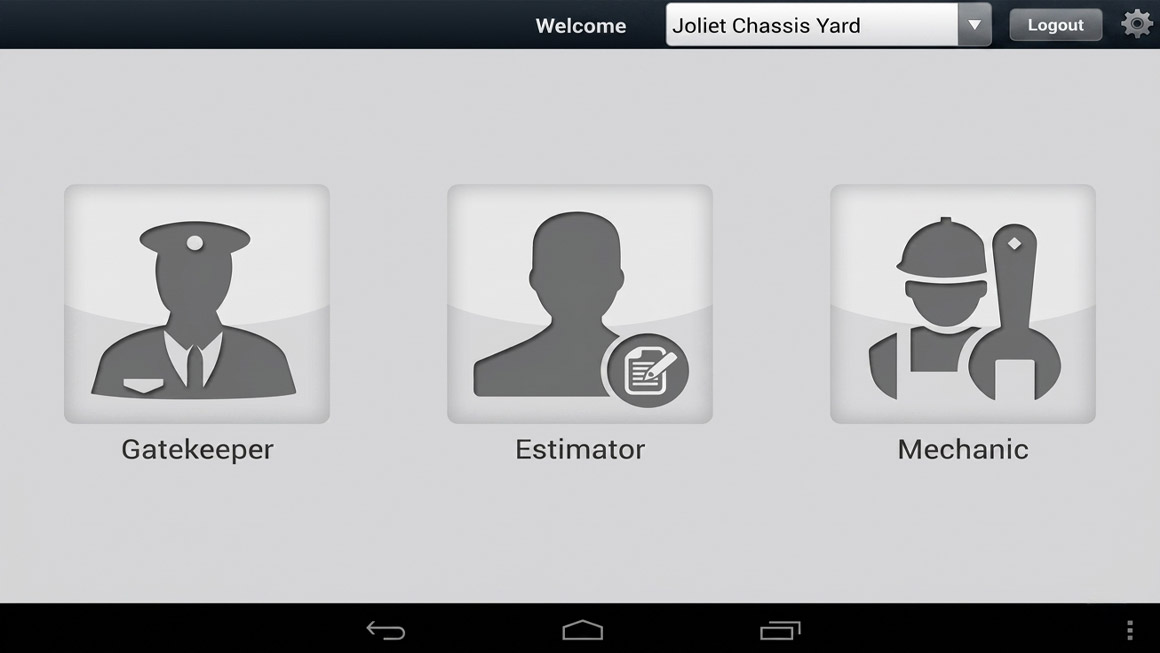
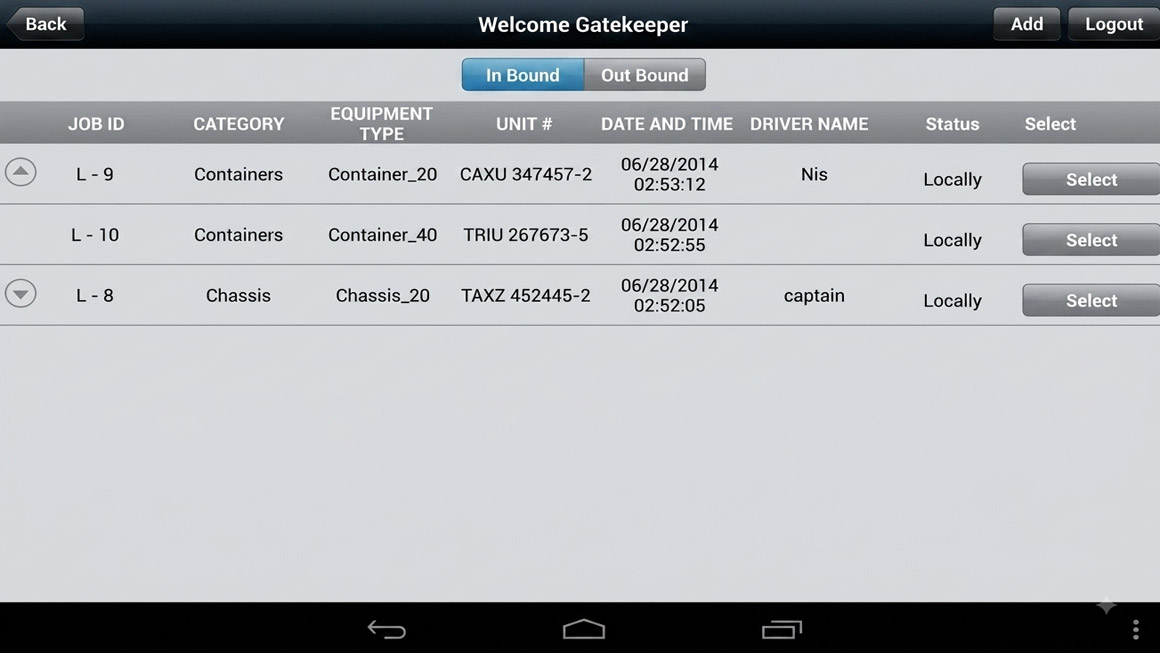
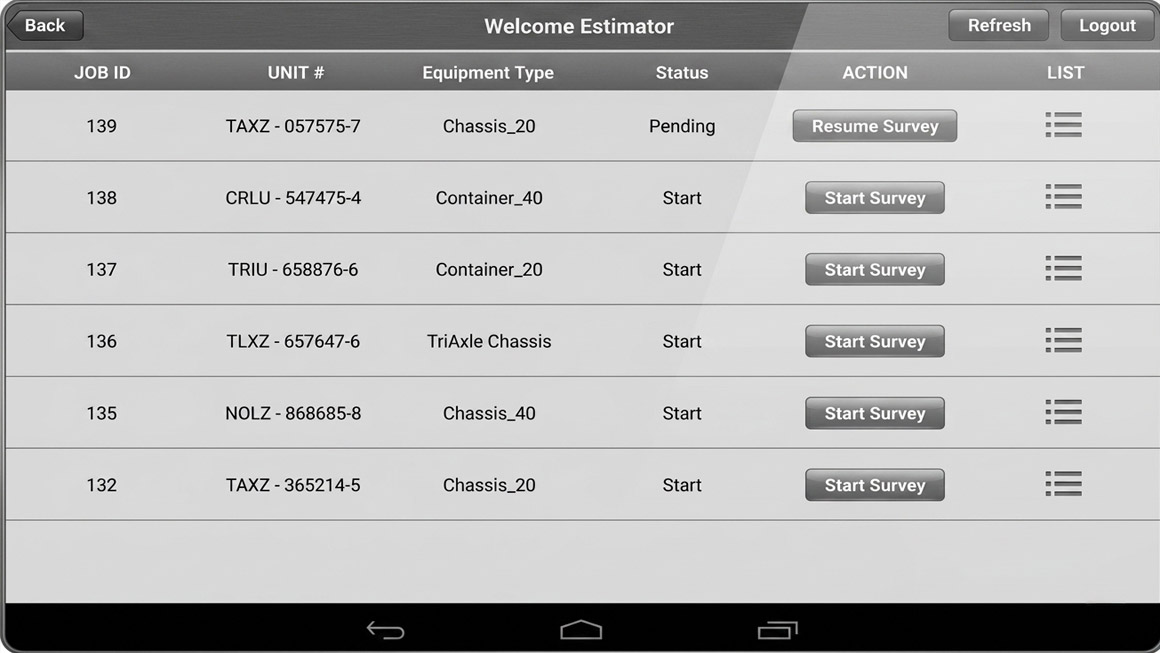
The vision was to eliminate paper-based yard inspections and build an intelligent, interactive estimation ecosystem that simplifies complex technical workflows. The goal was not just digitization but operational transformation through 3D interaction, automation, and real-time cloud reporting.
The shipping industry traditionally relies on manual paper estimations, requiring inspectors to memorize component names, damage codes, repair codes, and rate charts. This resulted in frequent human errors, incomplete reporting, and processing delays of up to 7–8 days.
Operationally, inspectors were required to physically climb carriers to inspect container tops and interiors, increasing time and safety risks. Furthermore, inconsistent documentation across in-gate and out-gate processes created inventory mismatches and communication gaps.
Technically, the challenge was to convert complex chassis and container assemblies into optimized, interactive 3D models that could run smoothly on Android tablets while also supporting offline functionality and secure cloud synchronization.
We designed and developed a fully interactive Android-based estimation platform that combines 3D visualization, guided inspection workflows, and cloud-based reporting.

The hotspot interaction system allows inspectors to simply tap a component, automatically retrieving descriptions, sub-assembly details, and pricing logic, removing dependency on memorized codes. Each inspection captures timestamps, inspector identity, component metadata, and assembly references for audit-level traceability.